Wednesday, May 29, 2013

The Yellow House

Finished The Yellow House by Patricia Falvey. Set in the early 20th century in Northern Ireland, it's the story of a young girl, Eileen O'Neill, who grows to warrior womanhood amidst local politics and family tragedy. The book begins with her father coming home from the marketplace with tubs of yellow paint, to paint their ancestral family home, once lost and hard won, a warm yellow so that it may be seen from the top of Slieve Gullion, their nearby mountain. Eileen's brother and baby sister join in the painting of the house. This is perhaps the happiest moment in the book, for things soon go very wrong for all involved. There were times when I thought "how much more can Eileen take?", but from a holistic view, there was no tragedy that did not further the story or the development of the characters. This was a raw and exciting novel. I've developed the habit of using the word "feck" from it. Highly recommended for those who enjoy Irish literature. I look forward to reading Falvey's next novel The Linen Queen.

Monday, May 20, 2013

A Journey to the New World: The Diary of Remember Patience Whipple, Mayflower, 1620

Finished A Journey to the New World: The Diary of Remember Patience Whipple, Mayflower, 1620 by Kathryn Lasky. It's the first book in the "Dear America" series. Each book in the series is set during a poignant time in American history. The narrator is a young girl who records her observations of life during this time in her diary. Remember (Mem) Patience Whipple journeys from Holland to American on the Mayflower to start a new life with her family and a number of other Saints and non-Saints. Their intention is to land off the coast of Virginia. Instead they land on Cape Cod at Plymouth.

Mem records the rough seas, boredom and illness on ship, and her longing to disembark once they land. Once the plantation is built she and her family have their own house. The community meets two English speaking Native Americans who introduce them to the local native community and various forms of medicine and food. Mem records the first Thanksgiving feast, but also the loss of her mother and many others to illness. It's a frank account and I actually learned some things I didn't know (or didn't remember) about the time. I hope to read all the books in the series over time.

Friday, May 17, 2013

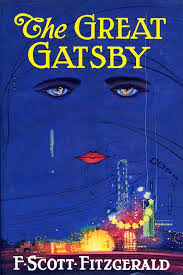
The Great Gatsby

Finished The Great Gatsby by F. Scott Fitzgerald for perhaps the 20th time. I had to revisit it just once more before seeing Baz Luhrmann's film adaptation. Every time I absorb Fitzgerald's prose I remember that he was my favorite author when I was in my 20s and a writer myself. This passage where Nick Caraway is describing Daisy is a perfect example why:

"For a moment the last sunshine fell with romantic affection upon her glowing face; her voice compelled me forward breathlessly as I listened – then the glow faded, each light deserting her with lingering regret, like children leaving a pleasant street at dusk."

I think perhaps it is the best book ever written.

The Things We Cherished

Finished The Things We Cherished by Pam Jenoff. It's set in 2009, and the early 1900s through the first few years of World War II. The contemporary characters are trying to prove the innocence of their client who has been accused of Nazi war crimes. The flashback portions of the novel involve various people and a handmade, glass domed anniversary clock. The novel is a bit of a mystery. The key to the client's innocence is hidden in this clock. We see the clock travel from the hands of the clockmaker to various owners over time. It reminded me a lot of the 1942 film Tales of Manhattan, where the audience follows the fate of a tail coat, and it's various owners, throughout the story. It was an interesting read.

Monday, May 13, 2013

Adam of the Road

Finished Adam of the Road by Elizabeth Janet Gray. It won the Newbery Meal in 1943. Set in thirteenth century England it is the story of Adam, whose minstrel father and dog Nick disappear during their travels together. Adam walks from town to town around London in search of these two who he loves best. He has many adventures and in the end is successful in finding them both. While this time period is not my favorite, Gray does a nice job of describing life during medieval England for her readers.

Thursday, May 9, 2013

Up From the Blue

Finished Up from the Blue by Susan Henderson. This is the story of Tillie Harris, newly returned to the D.C. area, married, very pregnant and on her own while her husband is away on business. She knows no one and has not unpacked her phone. When what she thinks are labor pains begin six weeks early she knocks on her neighbor's door in a panic, asking to use the phone. With the receiver in her hand she freezes. Who can she call? She calls the one person nearby who she knows. Someone she has not spoken to in years. Her father.

Flashback sixteen years to 1975, the year Tillie turned eight. The year that her family moved from the military base in New Mexico to a posh neighborhood in D.C. The year her mother disappeared. Tillie's father is a rigid, organized man who designs missiles for the military. Tillie's mother is quite the opposite. She is a waifish, will-'o-the wisp of a person with long red hair and a wonderful sense of fun and creativity. Tillie and her mother are like two little girls together, playing much of the day and hiding from the neighbors when they ring the doorbell. Since Tillie does not have any friends, her relationship with her mother is that much more important to her. Her mother has a difficult time keeping up with day-to-day tasks around the house. Soon she begins a decline that has her not leaving her bed for days. Between the move from New Mexico to D.C. she disappears all together. Tillie is stunned and bereft and begins to suspect her father of wrongdoing.

I love stories told from a child's point of view. They highlight the mistakes made by adults so acutely. Parents who keep their children in the dark about major family changes or events, thinking to protect them, do these children a great disservice. Left to rationalize the unexplained they fill the gaps with every frightening or negative scenario their parents hoped to spare them, whether they actually happened or not. This book is a surreal mystery with a poignant backdrop of 70s race relations and school busing issues. It grabbed my attention and held it. I read it quickly and felt deeply for Tillie and her fractured childhood. Highly recommended.

Tuesday, April 30, 2013

Journey in the Dark

Finished Journey in the Dark by Martin Flavin. It won the Pulitzer Prize in 1943. Set in and around the Chicago area from the turn of the 20th century until midway through World War II, this is a marvelous coming-of-age/family saga novel.

Sam Braden does not know that his family is poor until he doesn't receive a hoped for new sled for Christmas one year. His older sister impatiently scolds his disappointment. From that moment on he works hard to change his own as well as his family's circumstances.

There were parts of this novel that reminded me a lot of the film Citizen Kane. Sam Braden and Charles Foster Kane have sentimental recollections of their boyhood sleds. Both men become influential in their time and build estates with luxurious appointments. Both find that these material possessions hold little to no value in the end. Sam is a better man than Charles. He is never so great that he does not see the plight of those with less than him. He is kindly, generous and ultimately forgiving of people who have wronged him throughout his life. I really enjoyed this book and am adding it to my list of favorite Pulitzer winners. This book also won the Harper Prize in 1943. Other previous Pulitzer winners which also won the Harper Prize are The Able McLaughlins and Honey in the Horn.

Out of Africa

Finished Out of Africa by Isak Dinesen, aka Baroness Karen von Blixen-Finecke. It's a memoir of her life in Africa on her coffee plantation. She is a marvelous storyteller, capturing the characters of those around her with warmth and richness. The prose is at times gorgeous and at others gruesome. I listened to an audiobook recording of the work, read by Julie Christie. Christie's voice was perfect for this piece. Listening on my iPod, I often found myself smiling at the juxtaposition of listening to Dinesen's descriptions of the African landscape while I was standing at the bus stop, in the early morning dark, with ice crystals pelting me in the face.

Tuesday, April 23, 2013

Anna Karenina

Finished Anna Karenina by Leo Tolstoy. Finally. I began reading the novel last July in anticipation of the film's release in November. I had originally planned, for no no good reason, to read it when I turn 50, but the planned film released trumped that idea by two years. Since I only read a chapter or two a day here and there it ended up taking me ten months. This does not reflect on the quality of the novel, only on my lack of focus. In many ways it reads lake any other Victorian novel. It's clear to see that Russian society at the time was obsessed with all things French and some things British.

The large cast of characters includes everyone from the Fool (Oblonsky) to the Angel (Kitty). Anna herself seems a bit angelic at first, acting as mediator between her philandering brother Oblonsky and his wife Dolly, who is the epitome of motherhood. However, once Anna meets Count Vronsky her character and fate are changed forever.

Anna's infidelity and downward spiral reminded me a bit of Irene Forsyte's path in The Forsyte Saga, another sweeping epic with as many characters as a Russian novel. However, Irene proved a much stronger character than Anna, and luckily had more sympathy from others. Anna herself becomes such an unsympathetic character that I grew weary of her. I found Konstantin Levin far more interesting, three dimensional and cerebrally encouraging. Towards the end of the novel he questions his very existence and considers ending it all, but then has an epiphany, and while disappointed at first that the world does not now glow with meaning and goodness, he has the courage to go on and appreciate all it has to offer.

The 2012 film version of the novel was very cleverly staged within a theater, calling to mind the lines from As You Like It, "All the world's a stage and all the men and women merely players. They have their exits and their entrances." So true with this novel. However, while reading the book over all those months it was Vivian Leigh's face and voice, from the scintillating 1948 Alexander Korda production of the film, that I pictured and heard in my head.

Wednesday, April 10, 2013

The Woman in Black

Finished The Woman in Black by Susan Hill, originally published in 1983. I had some time to kill last Saturday, so I was browsing the fiction shelves at the public library, looking for something intriguing and slender to read. I happened upon the binding of this book and recognized the author's name. I pulled the book down and found an upholstered chair to sit in. It wasn't until I glanced at the cover as I opened the book that I realized that it was a movie tie-in edition for the film version starring Daniel Radcliffe, which came out last year. Oh well, I'd read it anyway.

The book was good, the murky, marshy, quicksandy godforsaken end-of-the-earth setting reminded me of The Moonstone by Wilke Collins. The first person traveling narrative reminded me of the voice of Doctor Watson narrating the various adventures of Sherlock Holmes. The woman in black, seen in the distance reminded me of the ghost of the governess in James' The Turn of the Screw. I make these comparisons as compliments. They made the book feel like an old friend. I read it in a few days while I was at home with another bout of shingles. Perhaps not as terrifying as the jacket implies, but a good gothic read nonetheless.

Wednesday, April 3, 2013

Good Stuff: A Reminiscence of My Father, Cary Grant

Finished Good Stuff: A Reminiscence of My Father, Cary Grant by Jennifer Grant. Cary Grant was sixty-two when Jennifer was born to him and his then wife Diane Cannon. He had retired from film making and applied himself to parenthood with great thought and tenderness. Jennifer's book is peppered with photos and notes typed by her father, things he wanted her to know or remember. Also included are little transcripts from his recordings of his interactions with Jennifer as a small child.

Jennifer's meandering stream of consciousness suits the story she has to tell. It's genuine and human, just like her father. This is a very personal tribute that no biographer could possibly pull off. But Jennifer has. Bravo.

Friday, March 29, 2013

Betsy and the Great World

Finished Betsy and the Great World, the ninth book of Maud Hart Lovelace's Betsy-Tacy series. It's 1914 and Betsy is now 22. She went to the U for a few years, but left and she and Joe have had some sort of falling out. She is at loose ends. Her father suggests a trip to Europe. She is to have a professor and his spinster sister as her chaperones. Just before sailing out of Boston harbor, Betsy catches a glimpse of Joe, now a journalist in Boston, interviewing a famous writer who is on board. She tries to catch his eye, but doesn't succeed. At the beginning of her trip she is lonely and seasick, but once the sea cooperates she is able to get up and explore the ship. She makes many friends and enjoys the people watching.

Once oversees she visits various places such as Munich, Venice, Paris and London, staying in each for quite a long while. Much of the time she is barely chaperoned at all and she has tremendous fun going and seeing and doing everything she has always dreamed of doing in Europe. She also has several close calls in the love department. Towards the end of her trip, while she is in London, England declares war on German. In the midst of this she and Joe make up their differences via letter/newspaper advertisement and she then sets sail for home.

I really enjoyed this book. I think it was Betsy's coming of age. Taking her out of Deep Valley and The Crowd gave her a chance to grow up a bit, open herself up to new ideas and unfamiliar cultures. The gap between senior year at Deep Valley High and this trip was a bit baffling, but there was a four year gap in between the writing of this and the previous book. All the other books had been written one a year. This is a must read for Betsy-Tacy fans.

The Postmistress

Finished The Postmistress by Sarah Blake. Set just before America enters World War II, it is the story of three women, a newlywed who has finally found a home after losing her parents as a small child, a reporter based in London during the worst of The Blitz, and a single, orderly postmistress on Cape Cod. Their stories intertwine in surprising ways. This book is both compelling and deeply upsetting. Blake's descriptions of The Blitz are shockingly real. Her characters are so genuinely human, especially Frankie Bard, radio reporter working with Edward R. Murrow in London. She's brassy and game for anything in terms of a real assignment. When she gets it in the form of recording the stories of Jewish refugees traversing Europe trying to find a way out, she spends several weeks riding in trains with them, recording their voices and is left to guess at their fates.

Wednesday, March 20, 2013

The Battle of Life: A Love Story

Finished The Battle of Life: A Love Story, my 2012 Dickens read. Published in 1846, it's one of Dickens' Christmas Books. Like Alcott's Moods which I just finished, The Battle of Life features a threesome of young people in love, Alfred, and sisters Grace and Marion. Rather than marry the wrong person, Marion who is promised to Albert, stages an elopement with another man in order to set the scene for Albert and Grace to fall in love. Marion is then lost to her family for six years. She is thought to be the wife of Michael Warden, a questionable young man who has left England. In reality she has been living, unmarried, with her Aunt Martha until the lives of Albert and Grace are fully and happily entwined. She then returns to her family to reveal her selfless plan. While she loved Alfred dearly, she knew that Grace was the right wife for him, not herself.

I began reading this novella back in December, but put it down in the business of things. Having now finished it I can say it was a pleasant read with lovely illustrations by a variety of artists. The plot of misunderstandings had a decidedly Shakespearean lilt to it.

Monday, March 18, 2013

Moods

Finished Moods by Louisa May Alcott. This was Alcott's first published novel. It originally appeared in 1864, but was later heavily revised by the author and the updated version appeared in 1882. Like Whitman's Leaves of Grass I chose to read the final revision.

Moods is a coming of age novel about Sylvia Yule, a non-conventional seventeen year old who is more tomboy than young woman. She is friends with all animals and lives a bit wildly, much to the chagrin of her older, spinster sister Prue. Prue tries time and again to tame her, but to little avail. In her best tomboy spirit Sylvia accompanies her older brother Max and his friends Adam (ehem), and Geoffrey on a sailing/camping expedition. Of course both of the friends fall in love with Sylvia. Adam, who is also unconventional, shares Sylvia's tendency towards moodiness. In the novel it is almost considered a dangerous flaw. He is a wanderer, unable to settle down physically or intellectually. Geoffrey, however, is kind, gentle and generous and lives nearby in The Manse.

Sylvia falls for Adam, attracted by his sense of adventure and lack of societal ties. But Adam goes off on one of his adventures, leaving Sylvia and Geoffrey behind. During the year he is gone Geoffrey, unaware of Sylvia and Adam's feelings for each other, tries his best to win Sylvia's heart. She resists at first, but when she begins to feel that Adam will never return, that he has forgotten her, she agrees to marry Geoffrey, thus choosing the conventional path with her family's seal of approval. All seems well at first with husband and very young wife playing house together until one day Adam returns to claim Sylvia. It is then she realizes that she has made a terrible mistake.

This novel had a heavy dose of melodrama, especially toward the end, but I still found it enjoyable. I kept wishing for modern pharmaceuticals to help all these people out.